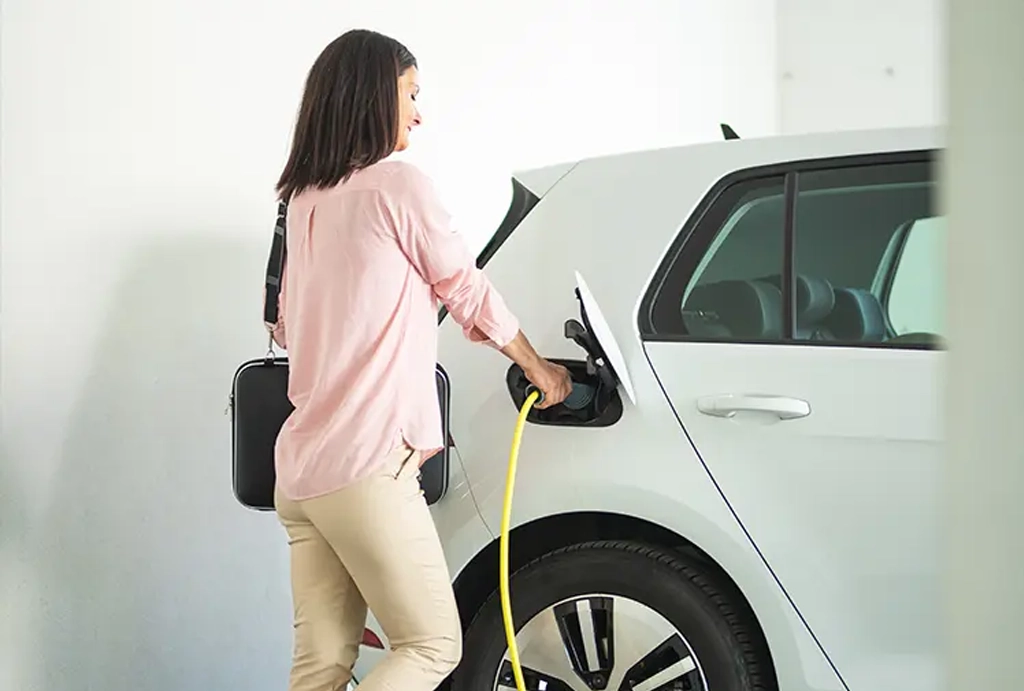
If you have filled up your car recently, you will have felt it. National average petrol prices hit $2.30 to $2.38 per litre in early 2026, with diesel pushing toward $3.00 in some areas. For the average South-East Melbourne household spending $80 to $120 a week at the bowser, that is a genuine financial pain point. It is also exactly why EV sales in Australia jumped 41 per cent in the first quarter of 2026, and why searches for home EV charger installation have surged to record levels. Here is the full picture.
$2.30+
Average petrol price per litre, early 2026
41%
Jump in EV sales, Q1 2026 vs Q1 2025
20%
Record EV market share, May 2026
$10,750
Estimated 10-year EV ownership saving vs petrol
Looking to install an EV Charger?
Let’s have a chat. Our local team’s here to walk you through it, step by step.
Why petrol prices have surged in 2026
The price spike Australians are experiencing in 2026 is the result of several compounding factors. Global oil supply disruptions, geopolitical tensions in the Middle East, a weaker Australian dollar against the US dollar, and lingering supply chain pressures have all pushed the pump price well above the averages of recent years.
The federal government moved to temporarily halve the fuel excise from 52.6 cents to 26.3 cents per litre from late March through to the end of June 2026, providing some short-term relief. But that measure is temporary. Once the excise returns to its full level, the underlying structural pressures driving fuel prices higher will reassert themselves.
For South-East Melbourne commuters on the Casey and Cardinia corridor, many of whom drive significant distances to employment hubs in Dandenong, Frankston or the Melbourne CBD, this is not an abstract number. It is a weekly budget hit that compounds every time you fill up.
Is your petrol car becoming a financial liability?
If you want a plain-talking take on exactly what is happening to Australian petrol drivers right now, this is worth 10 minutes of your time. Markus from Your Energy Answers breaks down why petrol drivers are increasingly exposed to global oil market shocks they have no control over, how a new wave of affordable EVs is changing what is available to Australian buyers, and why 2026 may be the year the switch from petrol to electric stops being an environmental decision and starts being a purely financial one.
The video also covers the solar and battery pairing angle that is particularly relevant to South-East Melbourne homeowners — because the households getting the most out of an EV right now are the ones combining it with rooftop solar to charge on power they generate themselves.

What it actually costs to run a petrol car versus an EV in South-East Melbourne
The running cost comparison between petrol and electric vehicles has shifted considerably in favour of EVs as pump prices have climbed. Here is how the numbers look for a typical South-East Melbourne household driving around 15,000 kilometres per year.
Petrol car
Annual fuel cost at $2.30/litre
A typical mid-size petrol SUV uses around 8 to 10 litres per 100 km. At 15,000 km per year and $2.30 per litre, annual fuel cost sits between $2,760 and $3,450.
Add scheduled servicing, oil changes and the general mechanical complexity of a combustion engine, and total running costs climb considerably higher.
Electric vehicle
Annual charging cost at home
A typical EV uses around 15 to 18 kWh per 100 km. At 15,000 km per year and charging at home on a standard off-peak tariff of around 15 to 20 cents per kWh, annual charging costs sit between $338 and $540.
If you charge on solar you generate yourself, that cost drops to near zero. Servicing costs are also dramatically lower with no oil changes or complex drivetrain maintenance.
The difference is stark. A South-East Melbourne household switching from a petrol SUV to an EV and charging primarily at home stands to save $2,000 to $3,000 per year in fuel costs alone, before factoring in the servicing savings. Over ten years, EV ownership is estimated to save Australian households around $10,750 compared to an equivalent petrol vehicle.
Why home charging is the key to making an EV work financially
The economics of EV ownership depend heavily on where and how you charge. Charging at a public fast charger typically costs 40 to 60 cents per kWh, which is still cheaper than petrol on a per-kilometre basis but far more expensive than charging at home overnight.
Home charging at off-peak rates of 15 to 20 cents per kWh is where the real savings are. And if you have solar panels, the cost drops further still. A solar-connected home EV charger set to charge during peak generation hours can effectively run your car on free electricity for much of the year.
This is why searches for home EV charger installation have increased 413 per cent year on year in Australia. EV owners who do not have a dedicated home charger are leaving significant money on the table every time they pay for public charging instead.
Solar plus EV: the strongest combination in 2026
A home with solar panels, a battery and a dedicated EV charger represents the most cost-effective energy setup available to Australian households right now. You generate your own power, store it in the battery, and charge your car overnight on energy that cost you nothing to produce. Electrical Masters designs and installs all three as a combined system for South-East Melbourne homes.
How the retrofit process works with Electrical Masters
Adding a battery to your existing system is a straightforward process when handled by an experienced installer. Here is what to expect when you work with Electrical Masters:
We start with a free site assessment where we review your existing solar system, inverter, switchboard and energy data. We then recommend the most suitable battery brand and capacity for your setup and provide a written quote showing the full price, the federal rebate as a separate line item, and the post-rebate price you will pay.
Once you give us the go-ahead, our in-house team carries out the installation, typically in a single day for a standard residential retrofit. We handle all grid connection paperwork and ensure your system is configured for maximum self-consumption from day one. We then walk you through your monitoring app so you can see your solar, battery and grid usage in real time.
What size battery do I need?
Battery sizing depends on your household’s daily energy consumption and how much of your solar generation is currently being exported. As a general guide, most South-East Melbourne family homes are well served by a battery in the 10 to 13 kilowatt hour range. This is typically enough to cover evening and overnight usage and captures a meaningful portion of daytime solar generation that would otherwise be exported.
A battery that is too small will fill up quickly and still leave you exporting mid-afternoon generation. A battery that is too large will never fully charge on a typical day and will have a longer payback period. Getting the sizing right matters, and it starts with looking at your actual energy data rather than guessing.
Electrical Masters reviews your electricity bills and solar monitoring data as part of every battery assessment. We will recommend a system size based on what your household actually uses, not what sounds impressive on a spec sheet.

Planning to get an EV or heat pump?
If you are thinking about an electric vehicle or a heat pump hot water system in the next year or two, factor that into your battery sizing now. Both add meaningful electricity load to your household, and a battery sized for today’s usage may not be the right fit for tomorrow’s. Electrical Masters can size your system to account for planned electrification upgrades so you do not need to upsize the battery later.
Frequently asked questions
How much does it cost to install a home EV charger in South-East Melbourne?
A standard home EV charger installation by Electrical Masters typically costs between $1,200 and $2,000 all up, depending on the complexity of the cable run and whether any switchboard work is required. We provide a fixed written quote before any work begins.
Which EV charger brand does Electrical Masters install?
We install GoodWe EV chargers for home and commercial applications. GoodWe chargers integrate particularly well with GoodWe solar inverter systems and include app-based monitoring so you can schedule charging around your solar generation or off-peak tariff periods.
Do I need solar to benefit from a home EV charger?
No. Even charging on standard grid power at home is significantly cheaper than public charging and far cheaper per kilometre than petrol. Solar makes it even more cost-effective, but the home charger delivers value on its own regardless.
Will petrol prices come back down significantly?
Forecasters suggest Australian petrol prices are likely to remain elevated through 2026 and into 2027, with projections pointing toward continued upward pressure from global supply constraints and currency dynamics. The temporary excise cut provides short-term relief but does not change the structural outlook for fuel costs.