Jinko Solar Panels
what they are, how they work, and why they are one of the most popular choices in Australia
Jinko Solar is the world’s largest solar panel manufacturer by shipment volume, and their Tiger Neo range is consistently one of the most recommended residential panels in Australia. This page explains the technology behind them, what the specs mean in practice, and whether a Jinko panel is the right fit for your South-East Melbourne home.

Who makes Jinko solar panels?
JinkoSolar is a Chinese solar manufacturer and currently the largest producer of solar panels in the world by shipment volume, holding around 18 per cent of global market share. That scale matters for Australian homeowners because it underpins both Jinko’s ability to invest heavily in research and development and their capacity to honour warranties through a local Australian subsidiary decades into the future.
Jinko is classified as a tier-1 solar manufacturer, which in the solar industry means they meet the financial strength, manufacturing consistency and bankability benchmarks that distinguish reliable long-term products from lower-quality alternatives.
Electrical Masters includes Jinko in our panel range because they represent excellent technology at an accessible price point. For South-East Melbourne homeowners who want a high-performing, well-warranted panel without necessarily paying the premium of the very top tier, Jinko is often the right answer.
Up to 23.8%
Panel efficiency on Tiger Neo range
N-type TOPCon
Cell technology — more stable than P-type PERC
0.4%/yr
Annual degradation rate — among the lowest available
25 yr
Linear performance warranty
Interested in Jinko Solar Panels?
Let’s have a chat. Our local team’s here to walk you through it, step by step.
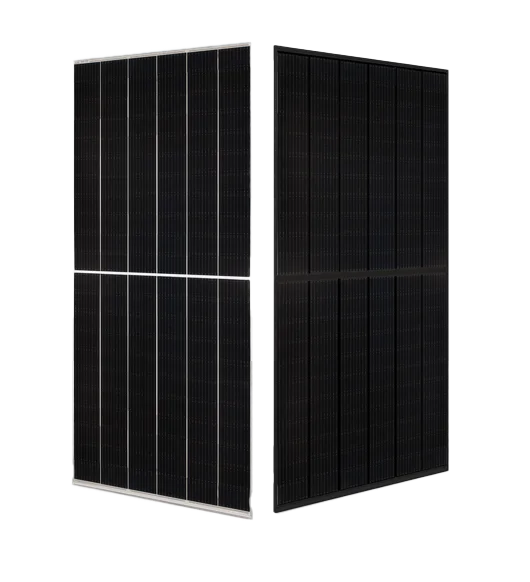
What is N-type TOPCon technology?
Most solar panels installed in Australia over the past decade used P-type PERC cell technology, which was the industry standard for a long time. Jinko’s Tiger Neo range uses N-type TOPCon cells, which represent the next generation of mainstream solar cell architecture and improve on P-type in several meaningful ways.
TOPCon stands for Tunnel Oxide Passivated Contact. In simple terms, it refers to a thin layer of passivation material added to the rear of the cell that reduces the amount of energy lost as electricity passes through the cell to the wiring. Less energy lost internally means more of the sunlight captured by the cell is converted into usable electricity, which is why TOPCon panels achieve higher efficiency ratings than equivalent P-type panels.
The N-type part refers to the silicon used in the cell. N-type silicon is made from a higher-purity material than the P-type silicon used in older panels. It is less susceptible to light-induced degradation, the efficiency loss that affects all solar panels when they are first exposed to sunlight, and it degrades more slowly over the 25-year life of the panel. In practical terms, a Jinko Tiger Neo installed today will be producing a higher percentage of its original rated output in year 20 than an equivalent P-type panel installed at the same time.
Jinko also uses half-cut cell design and Super Multi-Busbar (SMBB) technology across the Tiger Neo range, both of which improve the efficiency of current collection across the panel face and reduce the impact of partial shading on overall panel output.
The practical benefits of Jinko Tiger Neo panels
The types of homes that benefit most from Jinko Tiger Neo panels
AIKO panels are a strong option for most residential solar installations across South-East Melbourne, but they are particularly well suited to certain situations.
Most standard residential homes
Budget-conscious buyers wanting quality
Coastal and exposed properties
Homes adding battery storage
Long-term owner-occupiers
Design-conscious homeowners
Interested in Jinko Solar Panels?
Let’s have a chat. Our local team’s here to walk you through it, step by step.
Frequently asked questions about jinko solar panels
What is N-type TOPCon technology in plain language?
TOPCon is a cell architecture that adds a thin passivation layer to the rear of the solar cell, which reduces internal energy losses as electricity flows through it. N-type refers to the higher-purity silicon used to make the cell. Together, these two features mean more of the sunlight hitting the panel is converted into electricity, the panel degrades more slowly over time, and it performs more consistently in hot conditions than older P-type PERC panels.
How efficient are Jinko Tiger Neo panels?
The Tiger Neo range achieves efficiency ratings up to 23.8 per cent in the dual glass variant, with standard residential models sitting between 21 and 23 per cent. This is meaningfully higher than most older P-type PERC panels, which typically sit between 19 and 21 per cent, and it means more electricity generated per square metre of roof space.
Do Jinko panels perform well in the Victorian summer heat?
Yes. The Tiger Neo’s temperature coefficient of around minus 0.29 to 0.30 per cent per degree Celsius is among the better performers in the residential market. On a South-East Melbourne rooftop at 65 to 70 degrees Celsius in January, a Tiger Neo loses noticeably less output than an equivalent P-type panel, which matters on the days you are running air conditioning hardest.
What warranty comes with Jinko Tiger Neo panels?
The Tiger Neo range comes with a 12-year product warranty covering manufacturing defects and a 25-year linear performance warranty guaranteeing that output stays above 87.4 per cent of nameplate capacity after 25 years, based on a degradation rate not exceeding 0.4 per cent per year after year one. Warranty claims for Australian customers are processed through Jinko’s local Australian subsidiary.
What is the difference between the standard Tiger Neo and the dual glass version?
The dual glass Tiger Neo replaces the conventional plastic back sheet with a second layer of heat-strengthened glass, creating a more sealed and durable panel structure. This improves resistance to moisture ingress, UV degradation and physical damage, and is particularly worthwhile for Mornington Peninsula properties exposed to salt air or for homeowners prioritising long-term durability.