AIKO Solar Panels
What they are, how they work, and why they suit most South-East Melbourne homes
AIKO is one of the most talked-about solar panel brands in Australia right now, and for good reason. Their All Back Contact technology produces some of the highest efficiency ratings available in the residential market. This page explains what that actually means in plain language, and whether an AIKO panel is the right fit for your home.

Who makes AIKO solar panels?
AIKO Energy is a Chinese solar manufacturer that has built a strong reputation in the Australian market over the past few years, particularly among installers who prioritise panel efficiency and build quality. The company focuses on a specific cell technology called All Back Contact, or ABC, which sets their panels apart from the majority of panels on the market.
AIKO panels are classified as a tier-1 product, meaning they meet the benchmarks for financial backing, manufacturing scale and product consistency that the solar industry uses to distinguish reliable long-term investments from lower-quality alternatives.
Electrical Masters includes AIKO in our panel range because we are confident in both the technology and the warranty support behind it. We recommend specific panel brands based on what suits each customer’s roof, budget and energy goals, and AIKO is a strong fit for a wide range of South-East Melbourne homes.
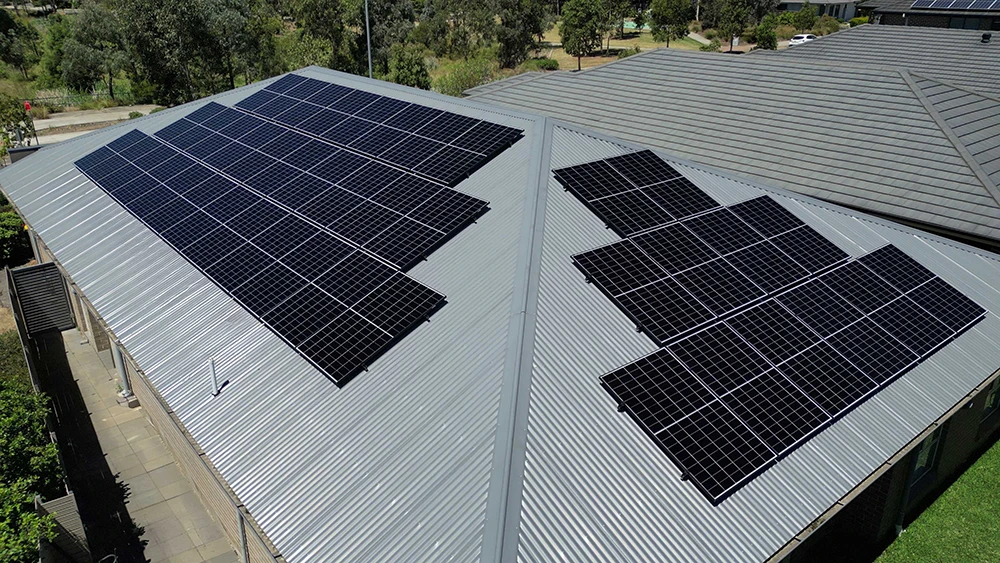
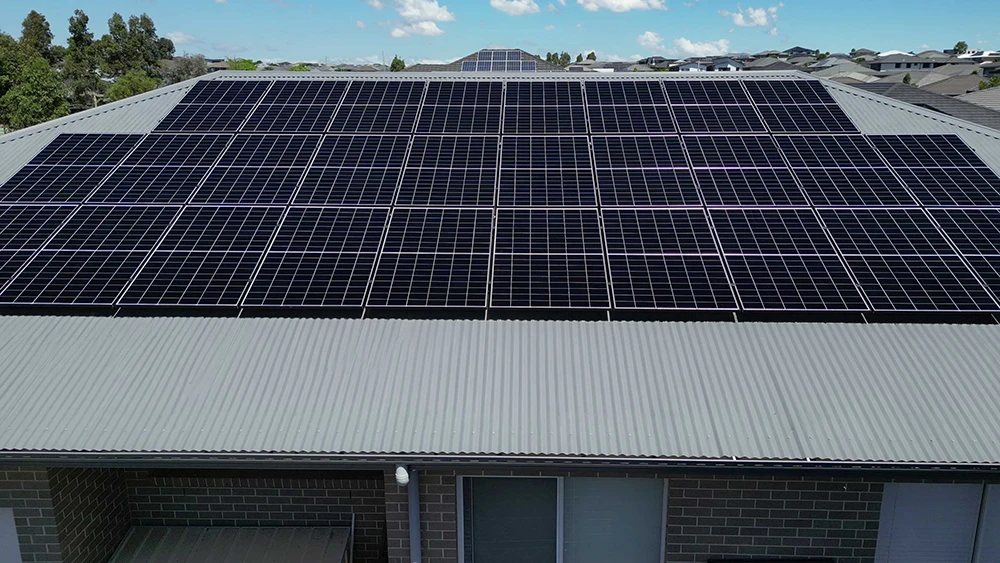
Over 25%
Panel efficiency rating — among the highest available
N-type
Cell technology — more stable in heat than P-type
0 front wires
All Back Contact — full cell face exposed to sun
25 yr
Product and performance warranty
Interested in AIKO Solar Panels?
Let’s have a chat. Our local team’s here to walk you through it, step by step.
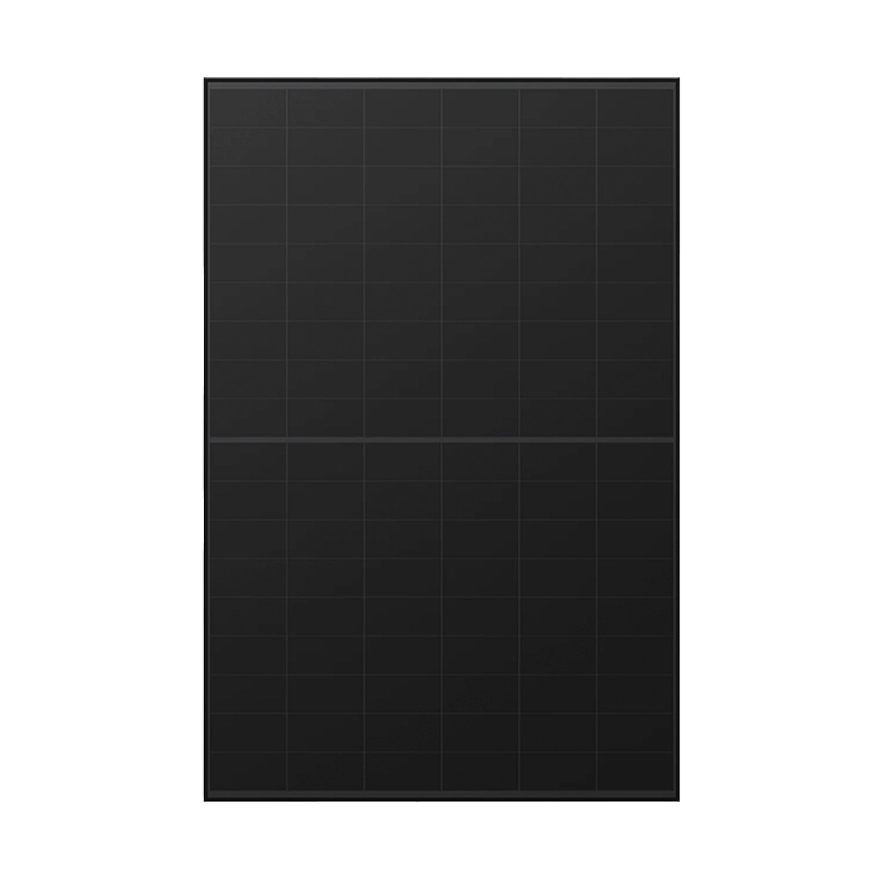
What is All Back Contact (ABC) technology?
On a conventional solar panel, you can see thin metal lines running across the front face of each cell. These are the electrical contacts that carry the current generated by the cell down to the wiring. The problem is that these lines shade a small portion of the cell surface, reducing the amount of sunlight that can reach the active material.
AIKO’s All Back Contact design moves all of those electrical contacts to the rear of the panel, leaving the entire front face of each cell completely exposed to sunlight. More sunlight reaching the active cell surface means more electricity generated from the same physical panel area. This is the primary reason AIKO panels achieve efficiency ratings above 25 per cent when most conventional panels sit in the 20 to 22 per cent range.
The cells themselves are also N-type monocrystalline, which means they are made from a higher-purity silicon that degrades more slowly over time and performs more consistently in high-temperature conditions, both of which matter for a panel that will be on your roof for 25 years or more in the Victorian climate.
The practical benefits of AIKO panels
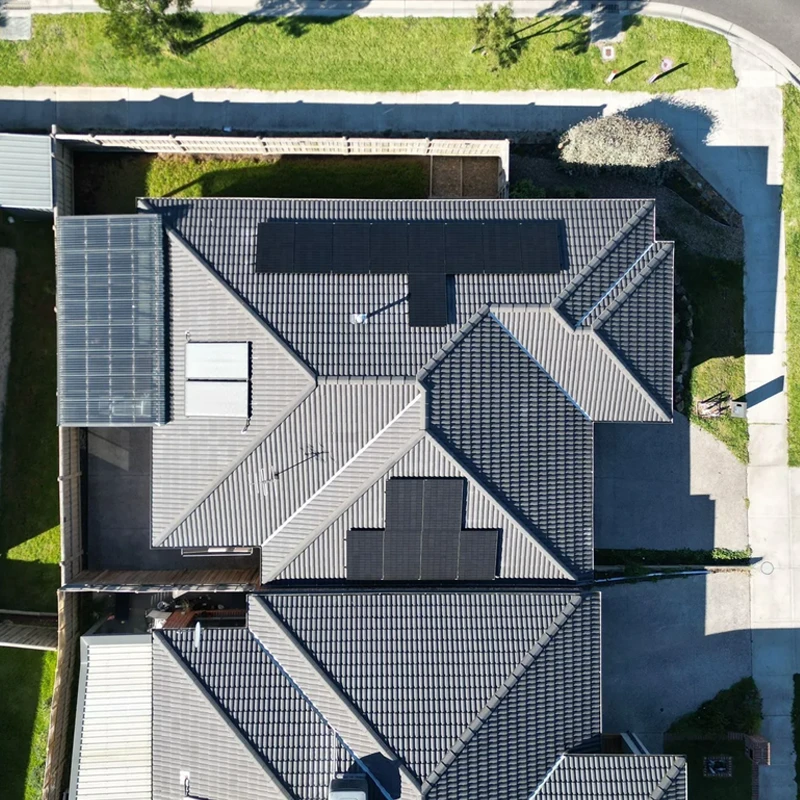
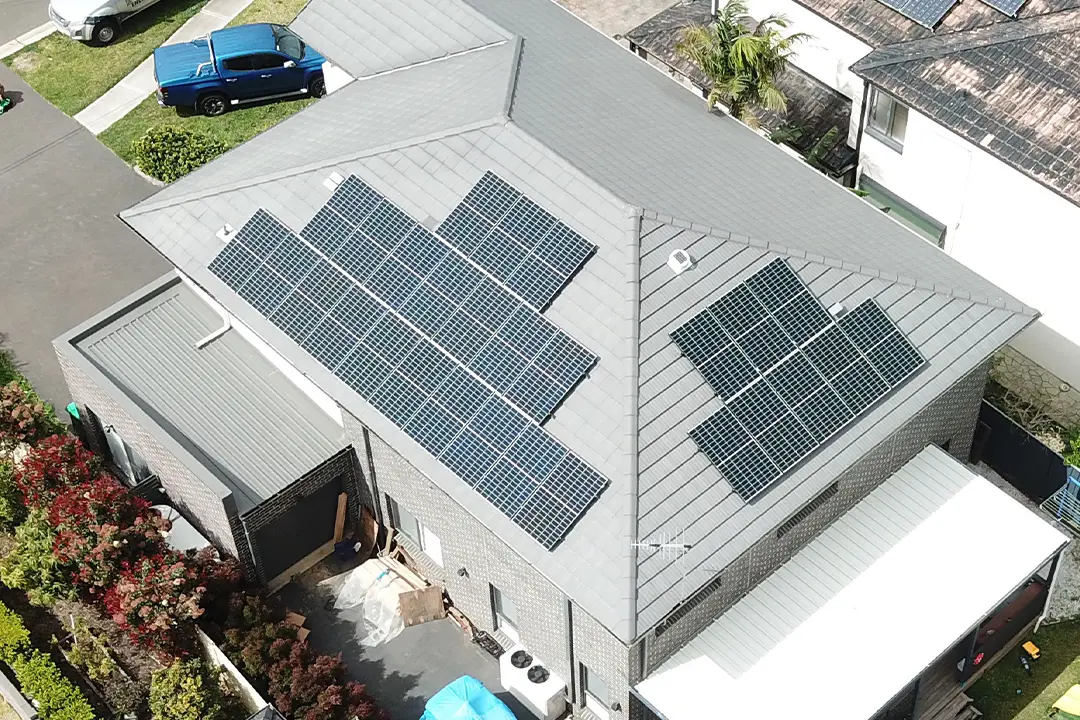
The types of homes that benefit most from AIKO panels
AIKO panels are a strong option for most residential solar installations across South-East Melbourne, but they are particularly well suited to certain situations.
Smaller or complex roofs
Homes adding battery storage
EV owners charging at home
Long-term owner-occupiers
Homes in warm areas
Design-conscious homeowners
Interested in AIKO Solar Panels?
Let’s have a chat. Our local team’s here to walk you through it, step by step.
Frequently asked questions about AIKO solar panels
What does All Back Contact (ABC) mean in plain language?
It means all the electrical wiring on an AIKO panel is on the back rather than the front. On conventional panels, thin metal lines run across the front face to carry current, and those lines shade a small area of the cell. Moving everything to the back removes that shading and lets the full face of each cell absorb sunlight, which is the main reason AIKO panels are more efficient than conventional designs.
How efficient are AIKO panels compared to standard solar panels?
Most conventional monocrystalline panels on the market sit in the 20 to 22 per cent efficiency range. AIKO’s ABC panels achieve efficiency ratings above 25 per cent, which is among the highest available in the residential market. In practical terms, this means a single AIKO panel generates more electricity than a conventional panel of the same physical size.
Do AIKO panels work well in Melbourne's climate?
Yes. AIKO’s N-type cell technology handles heat well, which matters across the Casey and Cardinia corridor in summer when rooftop temperatures can be extreme. They also perform reasonably in diffuse light conditions, which helps during Victoria’s cloudy winter months. The combination makes them a well-rounded choice for the South-East Melbourne climate.
What warranty comes with AIKO solar panels?
AIKO panels come with a 25-year product warranty covering manufacturing defects and a 25-year linear performance warranty guaranteeing that output stays above a specified threshold throughout the panel’s life. This sits alongside Electrical Masters’ own 10-year workmanship warranty on the installation itself.
Are AIKO panels a good choice if I have a small roof?
They are one of the better choices for limited roof space. Because each panel generates more power per square metre than a conventional panel, you can achieve a meaningfully sized solar system with fewer panels. For homes in established suburbs across South-East Melbourne where roof layouts can be restricted, this is a genuine advantage.