The “No-Subcontractor” Audit: Why Victoria’s Solar Safety Standards Fail with Outsourced Teams
Australia is one of the world’s biggest solar adopters, and Victoria leads much of that growth. Thousands of homes install rooftop solar every month to reduce power bills and carbon footprints. But behind this clean energy movement, a serious issue is quietly growing — safety.
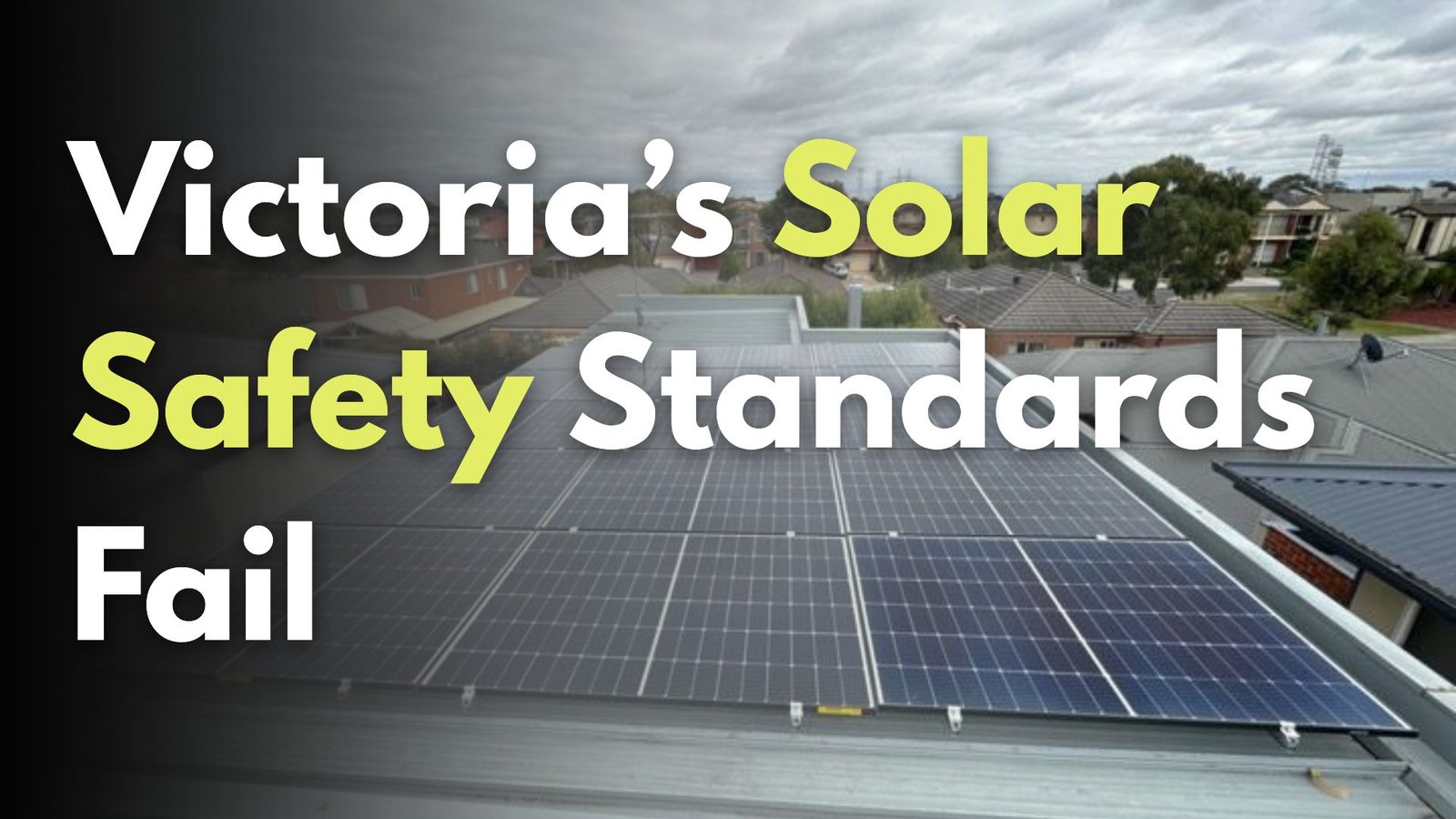
Despite strict regulations and government audits, Victoria’s Solar Safety Standards Fail when installations are handled by subcontracted crews instead of trained in-house teams. This is not about blaming solar itself. Solar is safe when installed correctly. The real concern is how systems are installed and who installs them.
Let’s unpack why subcontracting is a major weak point in Victoria’s solar industry and how a “No-Subcontractor” audit could protect homeowners.
Get a Free Quote
Understanding Victoria’s Solar Safety Framework
Victoria has some of the toughest solar safety rules in Australia. These include:
- Clean Energy Council (SAA) accreditation
- Electrical licensing requirements
- Australian Standards compliance (AS/NZS 3000 & 5033)
- Regular audits by regulators
On paper, everything looks secure. But in practice, Victoria’s Solar Safety Standards Fail when companies rely on outsourced installation teams who are disconnected from the business selling the system.
Why? Because safety systems only work when responsibility is clear.
What Does “Subcontracting” Mean in Solar?
Subcontracting is when a solar company sells you a system but hires another crew to install it.
This usually happens because:
- The company wants to install more systems faster
- They want to reduce labour costs
- They don’t want to train permanent staff
- They use “job-based” labour
While subcontracting is common in construction, it becomes dangerous in solar because:
- Installers may rush jobs
- Accountability becomes unclear
- Training standards vary
- Safety culture is inconsistent
This is exactly where Victoria’s Solar Safety Standards Fail most often.
Why Safety Breaks Down with Outsourced Installers
1. No Long-Term Responsibility
Subcontractors are paid per job. Once the job is done, they move on. If a wiring issue appears six months later, the installer is usually gone.
This creates a system where:
- The sales company blames the installer
- The installer blames the company
- The homeowner is stuck in the middle
When no one owns the long-term outcome, Victoria’s Solar Safety Standards Fail.
2. Speed Over Quality
Subcontractors earn more by finishing faster. That often leads to:
- Loose cable management
- Poor earthing
- Incorrect isolator placement
- Roof penetrations not sealed
- Panels mounted without correct spacing
These shortcuts increase risks of:
- Fire
- Electric shock
- Water damage
- System failure
Speed-based pay structures encourage unsafe behaviour — and again, Victoria’s Solar Safety Standards Fail.
3. Training Is Not Uniform
In-house teams receive consistent training. Subcontractors may come from:
- Different companies
- Different states
- Different skill levels
Some may:
- Lack proper solar-specific training
- Be unfamiliar with Victorian compliance rules
- Use outdated methods
When every crew works differently, Victoria’s Solar Safety Standards Fail because consistency disappears.
The “No-Subcontractor” Audit Concept
A “No-Subcontractor” audit is a simple idea:
Solar companies should only use fully trained, permanent in-house installers.
This audit would check:
- Are installers employees or subcontractors?
- Are they trained directly by the company?
- Are safety procedures documented and enforced?
- Is the same team responsible from design to installation?
This model creates:
- Accountability
- Quality control
- Long-term responsibility
- Better system performance
Without this structure, Victoria’s Solar Safety Standards Fail regardless of paperwork.
Real-World Risks Homeowners Face
Many homeowners believe:
“If it’s approved, it must be safe.”
But approval only checks documents, not daily workmanship.
Common problems seen with outsourced installs:
- DC cables exposed to sunlight
- Isolators installed incorrectly
- Panels fixed without roof flashing
- No surge protection
- Inadequate labelling
These are not small mistakes. They directly increase fire risk.
This is why Victoria’s Solar Safety Standards Fail at the operational level, not the policy level.
Why Regulators Struggle to Catch This
Regulators conduct audits, but:
- They inspect a small sample
- Installers can change weekly
- Faults may appear after inspection
- Responsibility is split
If a job fails inspection:
- The company blames the subcontractor
- The subcontractor blames the supplier
- Regulators issue fines but problems repeat
The structure itself is flawed, so Victoria’s Solar Safety Standards Fail again and again.
In-House Teams vs Subcontractors: The Difference
In-House Installers | Subcontracted Installers |
Direct company training | Mixed training backgrounds |
Long-term accountability | Short-term contracts |
Consistent safety culture | Varies by crew |
Easier quality control | Hard to supervise |
Brand reputation at stake | Paid per job |
When installers are part of the company, mistakes reflect directly on the business. That pressure improves quality.
When installers are outsourced, safety becomes someone else’s problem — and Victoria’s Solar Safety Standards Fail.
Case Example: Fire Risk from Poor Installation
In multiple Victorian incidents, solar-related fires were traced back to:
- Loose DC connectors
- Water ingress into isolators
- Poor cable routing
These were not product faults. They were installation faults.
And most were linked to subcontracted installation crews.
This proves that Victoria’s Solar Safety Standards Fail not because the rules are weak, but because the labour model is weak.
How Homeowners Can Protect Themselves
Before choosing a solar company, ask these questions:
- Do you use in-house installers or subcontractors?
- Are your installers CEC accredited?
- Who is responsible if something fails after installation?
- Do you provide post-install inspections?
- Is the same company doing design, supply, and install?
If a company avoids these questions, walk away.
Because when consumers don’t ask, Victoria’s Solar Safety Standards Fail silently.
The Electrical Masters Approach
At electricalmasters.com.au, safety is built into the business model.
We focus on:
- In-house licensed electricians
- Internal training programs
- Full compliance with Victorian standards
- One company responsible for the entire job
- No hand-offs to unknown subcontractors
This allows:
- Better workmanship
- Faster fault resolution
- Higher customer trust
- Long-term system reliability
We believe the future of solar depends on quality, not volume.
The Bigger Picture: Trust in Renewable Energy
Solar energy only works if people trust it.
When systems fail:
- Insurance premiums rise
- Public confidence drops
- Government tightens restrictions
- Good installers suffer
Poor workmanship damages the entire industry.
That is why fixing subcontractor dependence is critical — otherwise Victoria’s Solar Safety Standards Fail not just technically, but reputationally.
What Needs to Change
For real improvement, the industry needs:
- Stronger enforcement on installer identity
- Public reporting of safety breaches
- Consumer education
- Preference for in-house installation teams
- Clear accountability structures
Without these changes, safety problems will continue, and Victoria’s Solar Safety Standards Fail despite good intentions.
Final Thoughts
Solar power is one of the smartest investments for Victorian homes — but only when installed properly.
The uncomfortable truth is this:
Victoria’s Solar Safety Standards Fail when companies rely on outsourced installation crews with no long-term responsibility.
A “No-Subcontractor” audit would:
- Improve workmanship
- Reduce fire risks
- Increase consumer trust
- Strengthen the solar industry
Homeowners deserve systems that are safe, compliant, and built to last — not rushed jobs done by strangers.
If Victoria wants a safer solar future, it must rethink who is allowed on roofs and who is held responsible when things go wrong.
Talk to Our Expert