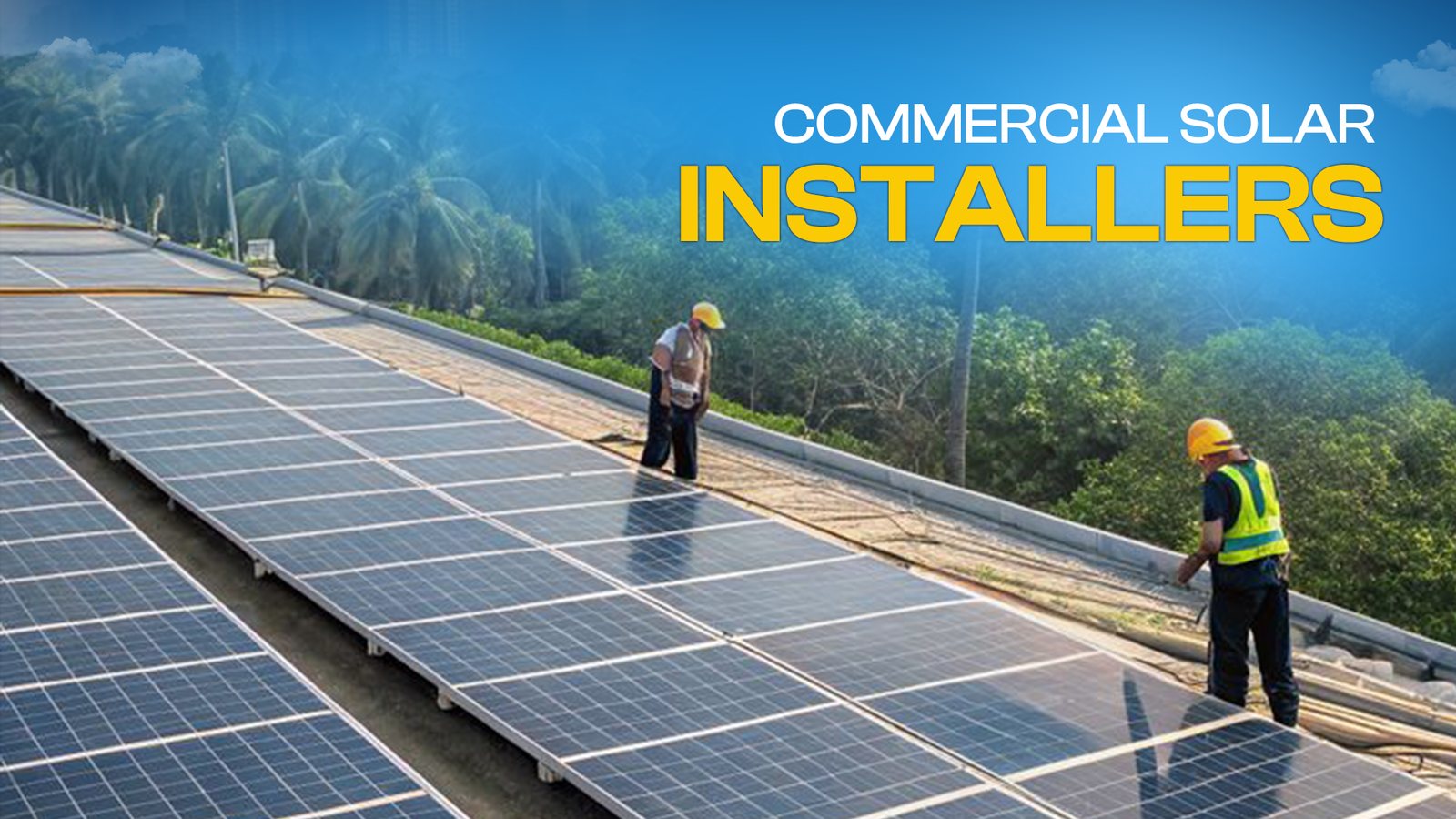
The Ultimate Guide to Hiring Commercial Solar Installers 2026
As operating costs rise across all sectors, companies of all sizes need long-term solutions to safeguard their bottom line. Transitioning your facility to renewable energy is no longer only an environmental project. it is also a highly strategic business choice. Businesses that work with skilled commercial solar installers could significantly reduce their expenses, safeguard against grid price swings, and achieve a quick return on investment (ROI).
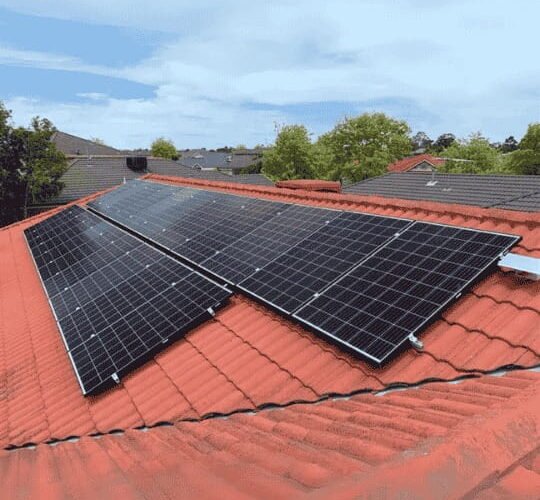
However, a large-scale commercial project is quite different from an average residential location. When comparing commercial solar companies to handle your project, company owners should look for technical knowledge, engineering skills, and long-term guarantees. The quality of the commercial solar panels installed on your roof is also critical to the success of any robust system, since commercial-grade gear is particularly designed for increased output and longevity.
This book will explain you through the undisputed financial advantages of switching to solar, how to choose the best installation team, and what to expect during a large-scale commercial rollout.
Get Enquiry for a Quote
Why Your Business Needs a Commercial Solar Upgrade
Investing in a commercial-grade solar system provides immediate operational benefits. Here’s why forward-thinking companies are making the transition:
1. Immediate ROI and lower operational costs
Most organisations’ energy use peaks during daylight hours, which is when solar arrays generate the most electricity. Using the energy your roof creates significantly reduces the amount of pricey power drawn from the grid. For facilities such as industrial plants, warehouses, and huge retail locations, this equates to thousands of dollars saved every quarter.
2. Tax incentives and depreciation.
Commercial solar investments are often eligible for large government rebates, such as Large-scale Generation Certificates (LGCs) or Small-scale Technology Certificates (STCs), depending on the system size (e.g., above or below 100kW). Furthermore, companies may often claim the solar asset’s depreciation on their taxes, increasing the payback time.
3. Promoting Corporate Social Responsibility (CSR)
Consumers and B2B partners now desire to do business with environmentally responsible enterprises. Installing a visible, high-capacity solar array indicates a physical commitment to decreasing your company’s carbon footprint, which may be used in marketing and corporate reporting.
How to Choose the Right Commercial Solar Installers
Not all solar contractors have the technical skills or staff necessary to complete a major commercial project. To safeguard your investment, look for the following factors while choosing installers.
- SAA Accreditation: Verify that the company uses Solar Accredited Australia (SAA) installers. This is not negotiable for safety and obtaining government certifications.
- Proven business Track Record: Residential experience does not necessarily mean business ability. Request case studies on prior 30kW, 50kW, or 100kW+ systems that they have successfully installed.
- In-House Engineering: The top installers do grid-protection engineering and structural roof inspections in-house, avoiding expensive delays.
- Transparent Financial Modelling: A qualified installation will give a full cash-flow study that includes your estimated ROI, payback duration, and predicted energy provides over a 25-year period.
- O&M Services: Commercial systems need continuous operation and maintenance (O&M). Select a partner that provides post-installation monitoring and preventive maintenance.
The Commercial Installation Process: What to Expect
A commercial solar rollout is a well planned undertaking. At Electrical Masters, we use a streamlined 5-step methodology to minimise disturbance to your everyday operations.
Step 1: Energy Audit and Feasibility Study.
The procedure starts with a thorough examination of your facility’s interval metre data. We analyse your load profile (when and how you utilise electricity) to determine the optimal system size. This prevents us from over-capitalizing on devices that will just export inexpensive electricity to the grid.
Step 2: Custom Engineering and System Design.
Commercial roofs often feature HVAC equipment, skylights, and complicated plumbing. Our experts undertake structural tests and create a unique mounting array that overcomes these challenges while providing optimum tilt and orientation for maximum yield.
Step 3: Network Distributor Approvals.
Unlike residential systems, connecting a big business array to the grid needs additional clearance from your local network distributor. We help for your all of the difficult grid-connection paperwork, including negotiating export limitations and secondary protection requirements.
Step 4: Staged installation.
Our commercial solar contractors coordinate with your property management to plan the actual installation. We prioritise minimising operational downtime by arranging material deliveries and scheduling big crane lifts or electrical switchboard replacements outside of busy business hours.
Step 5: Testing and handover.
Once installed, the system is subjected to basic electrical testing. We activate the heavy-duty commercial inverters, configure your real-time monitoring software, and offer your maintenance staff with a thorough handover documentation that includes warranties, shutdown protocols, and performance guarantees.
Ready to Transform Your Business Overhead?
Partnering with experienced commercial solar installers is the most efficient approach to ensure that your system is designed for most effective performance and durability. If you are ready to stabilise your energy costs while gaining a quick return on investment, our team of commercial professionals will guide you through the process from concept to final switch-on.
Frequently Asked Questions (FAQ)
Q: What is the payback period for a commercial solar system?
A: For most companies that operate during the day, a commercial solar system pays for itself in 3 to 5 years. After this payback period, the energy produced is basically free, considerably increasing your bottom line for the next 20+ years of the system’s life.
Q: Do we have to shut down work during the installation?
A: No, a complete operational stoppage is rarely necessary. Our commercial solar installers will work together with your facilities management. Any essential power outages—such as updating the main switchboard—are carefully arranged outside of your operation hours to guarantee no disruption to your company.
Q: What’s the difference between business and residential solar panels?
A: While the core technology is the same, commercial solar panels are often bigger, have greater wattage outputs (commonly 400W to 600W+), and are constructed with stronger frame to resist the harsher surroundings of industrial roofs over a 25-year period.
Talk to Our Expert