
Solar Rebate in Victoria 2026
Completely switching to renewable energy is no longer just an environmental option. It is a financial need for Victorian homes, given escalating power bills. By 2026, the Solar Rebate in Victoria will have evolved into a complex, multi-layered framework of state and federal rebates. Understanding these technical aspects is critical for the industry’s “Electrical Masters” and ready-to-help homeowners who want to achieve a solar investment payback period of less than five years and prepare for the complicated new federal battery rules that will go into effect in July 2025.
Get a Free Consultant on call
The Victorian Solar Homes Program: 2026 Core Incentives
The Victorian Government’s Solar Homes Programme continues to benefit as the foundation of local support. However, as we approach 2026, the focus has switched from straightforward “panel installs” to “smart energy ecosystems.”
1. Solar Panel (PV) Rebate: $1,400
Eligible Victorian homeowners may currently get an upfront refund of up to $1,400 for the installation of solar panels. While the dollar amount has not changed, the value proposition has increased as hardware prices for high-efficiency N-type modules have stabilised.
To qualify in 2026:
Income Limit: Your combined household’s taxable income must be less than $210,000 per year.
Property Value: The house must be worth less than $3 million.
Occupancy: You must be the owner-occupant.
System Age: If you already have solar, you may only reapply if your system is at least ten years old.
2. The Interest-Free Loan Strategy
To avoid the “sticker shock” of a high-quality installation, Solar Victoria provides a matching interest-free loan of up to $1,400. When combined with the rebate, this saves $2,800 on the upfront cost. At Electrical Masters, we find that most customers return the loan over four years using just the savings created by their power bills, essentially making the upgrade budget-neutral from the beginning.
The Federal July 2025 Solar Battery Rebate: The "Affordable Home Batteries" Era
The most major advance in the 2026 energy market will be the complete implementation of the Federal Solar Battery Rebate (The Better Home Batteries Programme), which was formally started in July 2025. This was created to address the “duck curve” of the Australian grid by increasing home storage.
As of early 2026, this government incentive offers a discount based on the “small-scale technology certificate” (STC) market. For systems executed before May 2026, the refund is around $310 to $336 per kWh. For an ordinary 10kWh battery, this results in an instant savings of around $3,100 to $3,400.
The 2026 “Step-Down” Warning: The federal government has confirmed a rebate decrease beginning May 1, 2026. On this date, the STC multiplier for batteries will drop. If you are contemplating a battery installation, finishing the project before May guarantees that you get the highest available rebate. Furthermore, systems must meet the “Virtual Power Plant” (VPP) qualification level, which the Electrical Masters team verifies for every installation.
Solar for Renters and Landlords: 2026 Updates
Victoria is the only state with a strong rental programme. Landlords may get a $1,400 refund (plus the interest-free loan) on up to two properties every year. In 2026, this has become a significant tool for property managers to improve asset value while relieving renters of rising energy prices.
Beyond the Panels: The Hot Water Rebate
The Solar Hot Water/Heat Pump Rebate can be ignored while discussing solar rebates in Victoria. In 2026, you may get up to $1,000 by replacing a growing gas or electric resistive heater with a high-efficiency heat pump. If you choose an Australian-made unit, you may be eligible for further local manufacturing benefits, bringing your total savings to almost $1,400.
Technical Excellence: The "Electrical Masters" Standard
In a competitive market, being at the top of search results needs more than simply understanding the statistics; it also demands technological expertise. To qualify for a Victorian refund in 2026, your system must fulfil serious “Master Level” criteria:
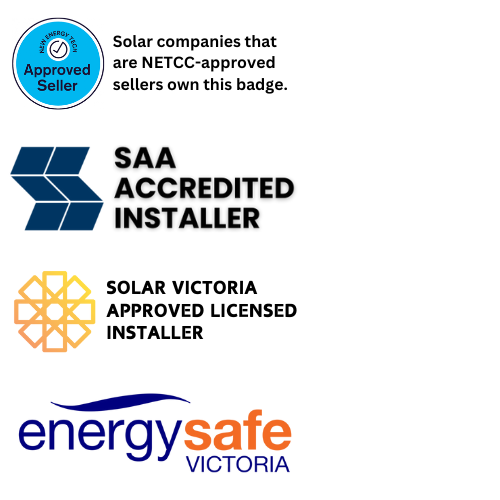
NETCC Approved: Your store must be a registered New Energy Tech Consumer Code signatory.
Approved Products: Only panels and inverters from the Solar Victoria Approved Product List are eligible for financing.
Digital safeguards: Installations now need a Solar Victoria QR Code scan during commissioning to avoid fraud and guarantee the rebate is delivered directly to the installer.
2026 Performance Expectations
With the 2026 STC “deeming period” decrease, the government subsidy for panels alone lowers by around 15% on January 1st. This makes 2026 crucial “sweet spot” before government solar panel rebates begin their last major drop towards 2030.
| Feature | State Benefit (VIC) | Federal Benefit (STC) |
|---|---|---|
|
Solar Panels |
$1,400 Rebate + $1,400 Loan |
Approx. $2,100 Discount |
|
Solar Battery |
VPP Credits/Eligibility |
Approx. $3,100+ Discount |
|
Hot Water |
Up to $1,000 Rebate |
Small Energy Certificates |
Why the "Cost of Delay" is Rising in 2026
Many homeowners are waiting for “better technology,” but by 2026, the technology has already reached peak efficiency. The actual variable is the incentive landscape.
- The May 2026 Battery Cliff: As previously stated, the government battery subsidy starts its first significant decline in May.
- Grid Access: As more individuals install solar in the Victorian suburbs, “export limits” are increased. Securing your grid connection now allows you to sell extra electricity back to the retailer even while the Feed-in Tariff (FiT) varies.
- Inflation vs. Rebates: Although labour and material prices are prone to inflation, rebate amounts remain set. A $1,400 refund covers a greater proportion of your system’s cost now than it would in 2027.
Final Verdict for Victorian Homeowners
The Solar Rebate in Victoria 2026 offers the most complete assistance package in Australia, especially because combined with the July 2025 Federal Battery Update. By combining state rebates, interest-free financing, and federal STC drops, a high-quality system that would have cost $18,000 can now be built for less than $11,500.
Electrical Masters help you the complete complex of the Solar Victoria Portal and assist you for federal rebates. Our objective is to make sure that your journey to energy independence is smooth, compliant, and financially beneficial.
FAQs – Solar Rebate and Incentives in Victoria
Eligibility is dependent on property ownership, family income, and whether you have already gotten a solar rebate. Check current criteria on the official Solar Victoria website.
Rebate amounts differ, but homeowners may often save up to several thousand dollars off their installation costs.
Yes, additional rebates and loans are available for solar batteries and heat pump systems under the Solar Program.
Electrical Masters gives information on rebate eligibility and paperwork but consumers must submit applications directly.
Yes. The Victorian Government also gives rebates for small enterprises to install solar systems, helping cut operating energy expenditures.