
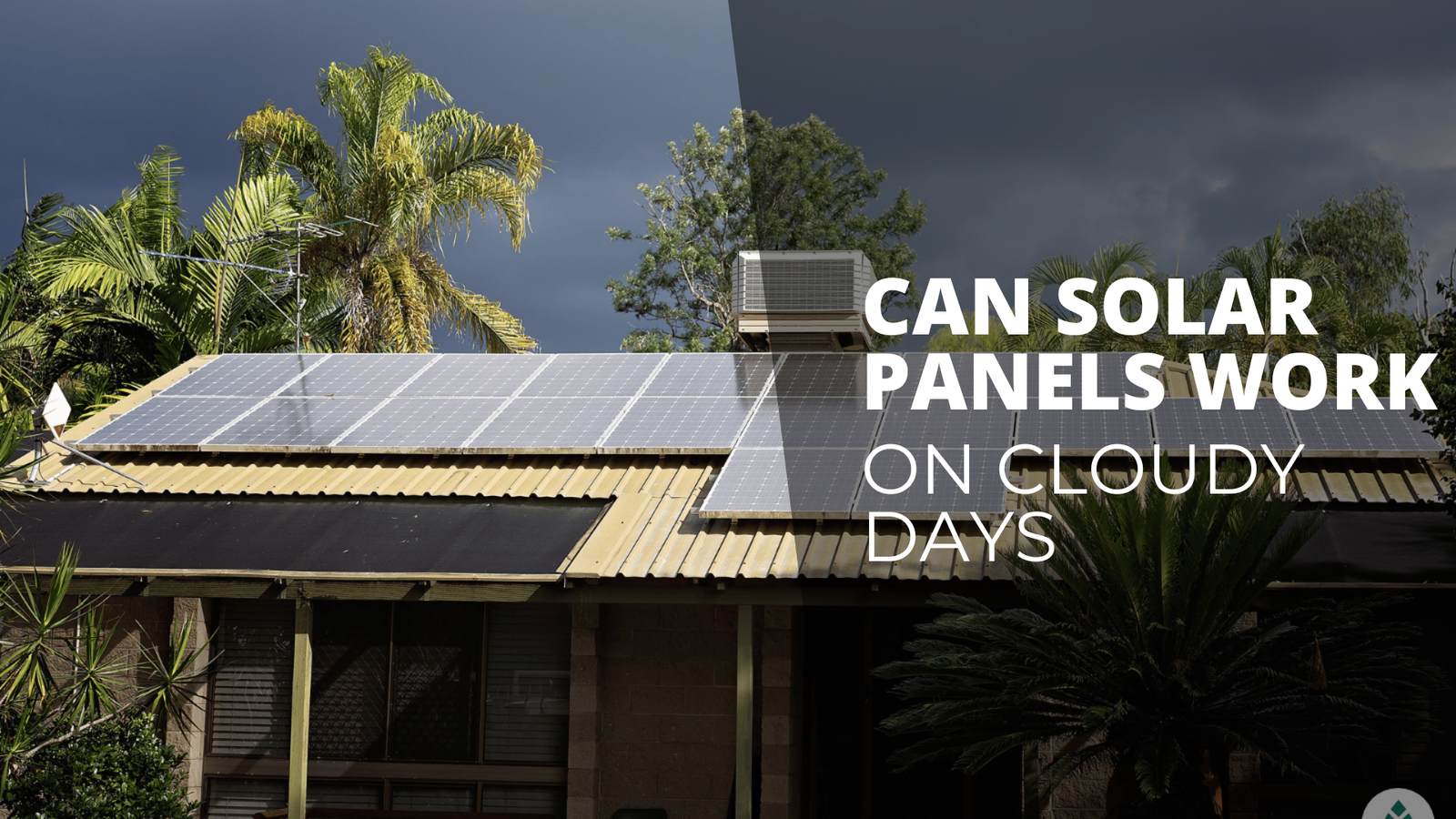
Can Solar Panels Work on Cloudy Days? A Homeowner’s Guide
You’re not the only one who has asked can solar panels work on cloudy days. A lot of people who are thinking about getting solar electricity are worried that cloudy or wet weather may make their investment not as beneficial. After all, solar panels need sunlight to make power?
The good news is that solar panels do work on cloudy days, although not at full capacity. Modern solar technology has come a long way, and even when the weather isn’t perfect, panels still make a lot of electricity. Let’s look at how it works, what impacts its performance, and how you can get the most value from your solar system, even when the sun isn’t bright.
Get a Free Quote
Understanding How Solar Panels Generate Power
Before we can answer the question of can solar panels work on cloudy days, we need to know how they make electricity in the very first place.
Photovoltaic (PV) cells, which are mainly formed of silicon, form solar panels. The photovoltaic effect is what these cells do to turn sunlight into electricity. When sunlight hits the panels, photons from the sun break electrons loose, which makes an electric current.
after that Your inverter changes this direct current (DC) into alternating current (AC), which is the sort of power that your home utilizes for lighting, appliances, and other electrical equipment.
Your panels will still make power as long as they get a little daylight, even if it’s not direct sunlight. This is why solar panels can still work on cloudy days, just not as well.
How Much Energy Do Solar Panels Produce on Cloudy Days?
How well solar panels work on cloudy days depends a lot on how thick the clouds are and how good your solar panels are.
- On a typical cloudy day, solar panels can generate between 10% and 25% of their normal output.
- On overcast or rainy days, production may drop further, but it rarely stops completely.
- In places like Melbourne, Sydney, or Brisbane — where the climate can shift between sunny and cloudy — solar energy systems are designed to handle these variations effectively.
Germany is one of the world’s leaders in solar power, but it has a lot more dark days than Australia. Still, it makes a lot of solar electricity every year. That shows that solar panels can perform well even when the sun isn’t shining all the time.
Why Solar Panels Still Work Without Direct Sunlight
Many people think that solar panels only work when the sun is shining directly above them. It’s true that solar panels only work with light, not heat or direct sunlight. The PV cells may still catch and turn into energy sunlight that gets dispersed by clouds, rain, or fog.
Here’s how it works:
- Clouds scatter sunlight, but they don’t block it entirely.
- Diffused sunlight is softer and less intense, yet still usable by solar cells.
- High-quality solar panels, especially monocrystalline types, are more efficient at capturing diffused light.
So, while your production dips on cloudy days, your system still contributes to your home’s energy needs — lowering reliance on the grid and saving you money.
The Role of Solar Batteries on Cloudy Days
Adding a solar battery is one of the best methods to protect your solar system from the weather.
On sunny days, solar panels often make more electricity than your home requires. You may store this extra energy in a battery and use it later, such on cloudy days or at night.
Here’s why solar batteries make sense:
- Continuous Power Supply: Even if the weather is gloomy, your stored energy keeps your home running smoothly.
- Energy Independence: You rely less on the grid, especially during power outages or rainy weeks.
- Better Return on Investment: Stored energy reduces your electricity bills year-round.
With a hybrid solar system — one that combines panels and a battery — you can maximise energy generation and usage regardless of the weather.
Do Rainy Days Affect Solar Panel Performance?
Just like with cloudy weather, solar panels work on rainy days, but at a lower capacity. In fact, light rain can even benefit your system.
Here’s how:
- Rain washes away dust and debris, keeping your panels clean and more efficient.
- After rainfall, the cooler temperature can help panels operate more efficiently, since solar panels perform better in mild conditions.
So, while production may temporarily drop, your system’s overall performance can improve in the long run due to natural cleaning from the rain.
How to Maximise Solar Panel Performance on Cloudy Days
Even though solar panels can work on cloudy days, there are smart strategies to ensure you’re getting the most energy possible all year round.
1. Choose High-Efficiency Panels
Monocrystalline panels work best when there isn’t much light. SunPower, REC, and LG are several brands that are noted for keeping up their production even on cloudy days.
2. Optimize Your Panel Placement
Make sure your panels are facing the right direction (in Australia, they should face north) and are angled so that they get the most sunlight all year round.
3. Keep Your Panels Clean
Dust, dirt, and bird poop can make panels less effective, especially when the sun does not shine as highly. A quick cleaning every few months can keep them working at their best.
4. Install a Solar Battery
As was said before, a battery system makes sure you have electricity conserved for cloudy or rainy days, which keeps you safe.
5. Monitor Your System
Keep track of your daily and monthly production with a solar monitoring app. It helps you find performance decreases early and keep the system running smoothly.
Cloudy Weather vs. Winter Days: What’s the Difference?
A lot of people think that cloudy skies are a sign of winter inefficiency. But solar panels can work quite well in the winter, and often even better than in the summer.
This is because of the fact that solar panels work better when it’s cooler. In the winter, the amount of sunlight may go down, but the process of turning light into energy becomes more efficient because there is less heat.
On some days, a chilly, bright winter day can make more electricity than a scorching summer afternoon, when the panels can get too hot. Even when the sky is cloudy, solar panels still work.
Real-World Example: Solar in Australian Conditions
Australia experiences diverse weather patterns — from sunny Queensland to cloudy Victoria. Yet, solar continues to thrive across the country.
Take Melbourne, for example. It’s known for its “four seasons in a day” weather, with plenty of cloudy moments. Still, homeowners across Victoria enjoy excellent solar savings year-round because their systems are designed to balance out sunny and cloudy days.
That’s why solar panels work efficiently on cloudy days, making them a smart long-term investment anywhere in Australia.
Myth-Busting: Common Misconceptions About Solar Panels and Clouds
Let’s address some common myths:
Myth 1: Solar panels stop working on cloudy days.
False. They still generate power — just at lower capacity.
Myth 2: Solar doesn’t make sense in cities with mixed weather.
False. Countries like Germany and the UK with frequent cloud cover lead the world in solar generation.
Myth 3: Heat improves solar performance.
False. Solar panels produce less power in extreme heat and work better in mild, cool sunlight.
Why Solar Is Still a Smart Investment Rain or Shine
When you install solar, you’re not just investing in sunny days. You’re investing in a clean, reliable, and long-term energy solution that works all year round.
With today’s technology, including high-efficiency panels and battery storage, solar panels can work on cloudy days, rainy weeks, and during winter — all while delivering strong returns on investment.
You’ll enjoy:
- Lower power bills
- Long-term energy savings
- Increased home value
- Energy independence
And most importantly, you’ll be doing your part to reduce your carbon footprint and support Australia’s shift toward renewable energy.
Final Thoughts
So, can solar panels work on cloudy days? Yes, for sure.
Modern solar panels are made to absorb all reflected sunlight well, even if the amount of sunshine that hits them affects how much energy they make. Your panels stay functioning, whether it’s cloudy, rainy, or sunny. They silently power your home and save you money every day.
Now is the best moment to switch to solar if you are thinking about it. Your solar system can work well all the time, whether it’s raining, shining, or cloudy, thanks to incentives, better panel designs, and smarter ways to store electricity.
One of the best solar installation providers in Victoria is Electrical Masters. They offer professional guidance, high-quality solar systems, and installation at your home or company.
quote us today to learn how to acquire the greatest solar system for your home. You’ll save money on energy costs no matter what the weather is like.
Talk to Our Expert


Thanks for sharing. I read many of your blog posts, cool, your blog is very good.