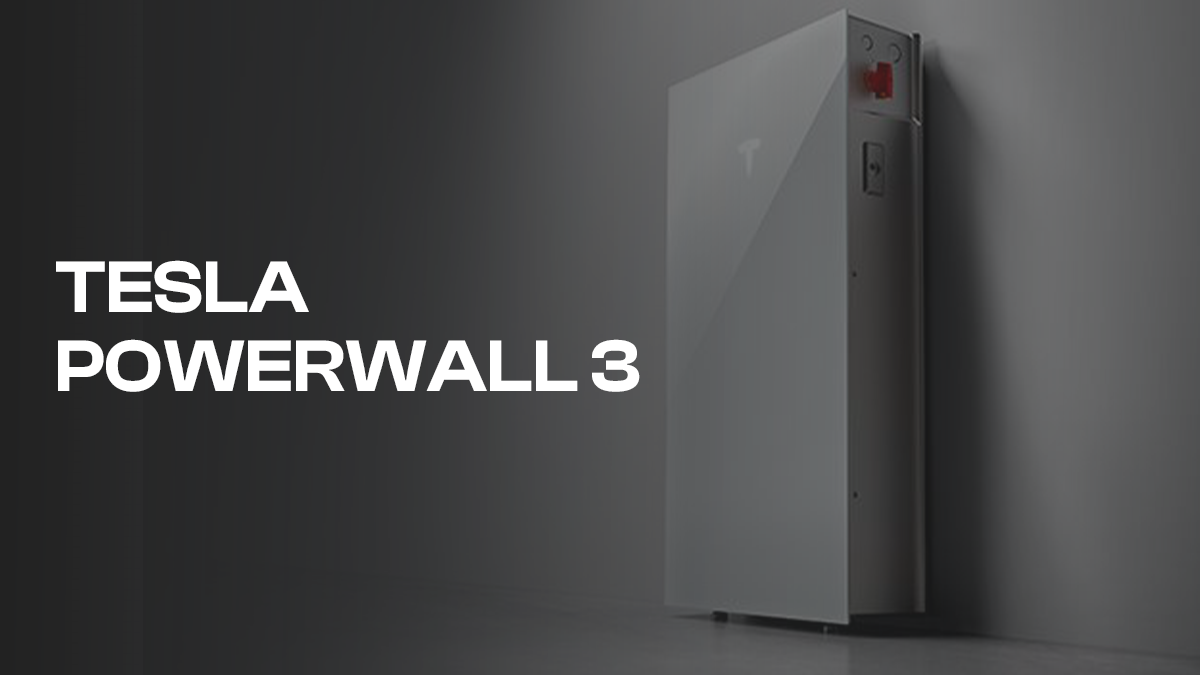
Tesla Powerwall 3 Price Australia

The Tesla Powerwall 3 has officially changed the home energy environment in Australia, providing a more powerful, integrated solution than its predecessor. For most Australian homes, the Tesla Powerwall 3 price between $14,500 and $16,500 for a fully built single-unit system. This pricing includes the 13.5kWh battery pack, the integrated solar inverter, and the necessary Backup Gateway. While the initial Tesla solar battery cost is massive, the enhanced efficiency and power production make it a strong challenger for those seeking energy independence.

Get a Free Quote

Please enable JavaScript in your browser to complete this form.

What is the Tesla Powerwall 3?

The Tesla Powerwall 3 represents the latest advancement in domestic energy storage. Unlike the Powerwall 2, which had an AC-coupled battery, the Powerwall 3 has a built-in hybrid solar inverter. This means it can handle both your solar panels and your battery storage in a single streamlined box, eliminating the need for extra hardware on your wall.

With a useable capacity of 13.5kWh and a large continuous power output of up to 10kW (nominal), it can easily operate high-demand equipment such as ducted air conditioning or electric car chargers during a power outage.

Tesla Powerwall 3 Price

When looking at the powerwall 3 prices, it is critical to differentiate between the “hardware-only” and “fully installed” costs. In Australia, costs depending on your location, the complexity of the installation, and whether you’re adding it to a new or existing solar array.

Hardware Costs (Wholesale and Retail)

The standard Tesla battery price for the device itself is presently approximately $11,200 to $13,250. However, you cannot operate a Powerwall without the Tesla Backup Gateway 2, which acts as the system’s “brain”.

  • Powerwall 3 unit costs: around $11,200 – $13,250.
  • Backup Gateway 2: around $1,950.

Installation & Labour

The cost of a Tesla battery in Australia, including expert installation, commonly adds $1,500 to $3,000 to the hardware price. If your switchboard needs a considerable modification to meet the 10kW output, the prices might be a bit higher.

Multiple-Unit Systems (Stacking)

While most houses use a single unit, the cost of the Tesla Powerwall 3 increases when additional storage is added to meet increased energy consumption. A single-unit arrangement costs between $14,500 and $16,500 to build and has a capacity of 13.5 kWh. If you need extra backup power, a dual-unit setup boosts your storage capacity to 27.0 kWh at an estimated cost of $23,500 to $25,500. A triple-unit system provides an outstanding 40.5 kWh of capacity for big properties or high-use families, with the Tesla Powerwall 3 pricing in Australia generally ranging from $33,500 to $35,500 completely installed.

Key Factors Influencing the Tesla Powerwall 3 Cost

Several factors will impact the ultimate tesla powerwall cost australia. Understanding them will help you plan your budget more accurately.

Retrofit vs New Installation

If you currently have solar panels, retrofitting a Tesla Powerwall 3 may need more complicated wiring than a “from-scratch” installation. Because the PW3 has its own inverter, some installers may choose to completely bypass your current solar inverter in order to maximise efficiency.

Site Complexity

Is your switchboard on the other side of the house from where the battery will be placed? Do you need a “whole-home backup” or just “essential circuits”? These choices have a considerable influence on labour hours as well as the price of Tesla storage batteries.

Location and Shipping

While metropolitan hubs like as Sydney, Melbourne, and Brisbane offer competitive pricing thanks to a high density of licensed installers, rural places in Western Australia and the Northern Territory may experience a minor rise in the Tesla Powerwall 3 price australia due to shipping and public transport expenses.

Powerwall 3 vs. Powerwall 2: Is the Price Difference Worth It?

Many Australians question whether they should look for a remaining Powerwall 2 or upgrade to the 3. Here’s why the Tesla Powerwall pricing in Australia for the newer model is typically seen as better value:

  • Inverter Integration: The PW3 has a 20 kW DC solar input capability. You do not need to purchase a separate solar inverter, which may save you over $2,000 on a new system.
  • Power Output: The PW3 produces 11.5kW peak and 10kW continuous power, compared to the PW2’s 5kW.
  • Efficiency: The round-trip efficiency has increased to around 97.5%, indicating that less energy is wasted throughout the charging and discharging operation.

According to SolarQuotes reliable reviews, the Powerwall 3 is now the most sought-after battery in the Australian market because of its integrated “all-in-one” design.

Financial Incentives and Savings

While the Tesla solar battery price Australia sounds high, various Australian incentives might reduce the “out-of-pocket” cost.

Virtual Power Plants (VPPs)

Joining a VPP allows a provider (such as Tesla Energy, Amber, or Origin) to systematically utilise your battery to stabilise the grid. In return, several providers give an initial reduction or continuous credit on your payment. In New South Wales, joining a VPP may occasionally reduce the Tesla battery price in Australia by $500 to $1,000.

State-specific loans

States such as the ACT and Tasmania sometimes provide interest-free or low-interest loans for battery storage. This enables you to pay off the purchase of a Tesla battery with the money you save on power bills.

Tesla Battery: How Much Can You Save?

The “real” cost of a Tesla Powerwall is not just the purchase price, but also the return on investment (ROI). With Australian power rates still variable, a Powerwall 3 may cut a typical household’s grid dependency by 70% to 90%.

If you pay $0.35/kWh for peak electricity and offset the your Tesla storage battery cost by saving 13.5kWh of energy every day, you could save more than $1,500 per year. When paired with a large solar array, the system typically pays for itself in 7 to 9 years.

Frequently Asked Questions (FAQ)

Q. How much is a Tesla battery for a house?
A. For a typical house, the Tesla battery pricing begins about $11,200 for the hardware, with entire installation generally costing around $15,500.

Q. Can Powerwall 3 operate with my current solar system?
A. Yes, although it is mainly intended for use in new systems or to replace outdated inverters. Your installer will decide whether an AC-coupled or DC-coupled design is ideal for your particular roof.

Q. What is the expected lifetime of a Tesla Powerwall 3?
A. Tesla offers a 10-year warranty that guarantees the battery will retain at least 70% of its capacity. Given its LFP (Lithium Iron Phosphate) chemistry, it is predicted to survive much beyond the guarantee term with proper care.

Is Tesla's Powerwall 3 price justified?

If you are an Australian homeowner looking for the gold standard in-home storage, the Tesla Powerwall 3 is worth the expense due to its industry-leading power output and smooth integration. It is not the cheapest battery on the market, but in terms of “cost per kilowatt of power delivered,” it is quite competitive.

Before making a decision, we suggest collecting at least three quotations from SAA Certified installers to guarantee you’re getting the best Tesla solar battery pricing in Australia for your exact region.

Talk to Our Expert
Please enable JavaScript in your browser to complete this form.

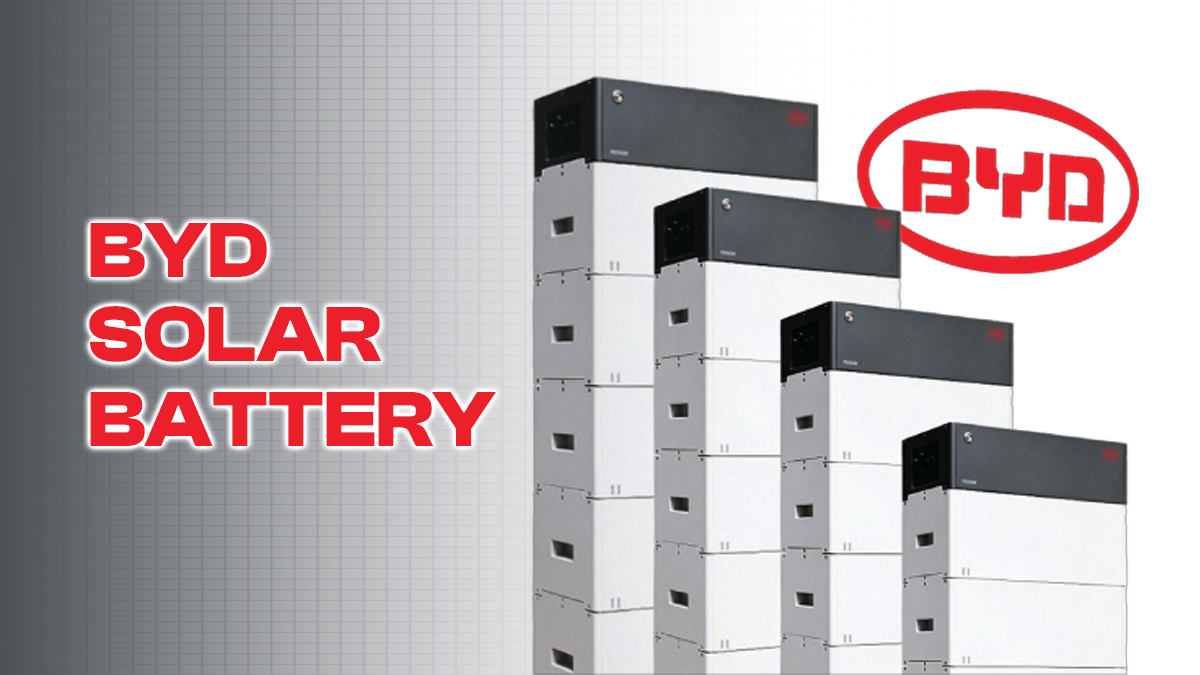
BYD Solar Battery

In 2026, the BYD solar battery price in Australia generally from $800 to $1,100 per kWh for equipment. For a traditional 10kWh installation, fully combined structures cost at approximately $8,500. In early 2026, the Federal “Cheaper Home Batteries” subsidy provides roughly $311 to $336 per kWh, which may decrease the net BYD battery cost between $5,500 and $7,500. This establishes an essential financial rebate for Australian homes, which frequently results in a payback term of just 5 to 8 years.

Get a Free Quote

Please enable JavaScript in your browser to complete this form.

What is a BYD Solar Battery?

BYD (Build Your Dreams) is a worldwide lead in Lithium Iron Phosphate (LFP) technology. In opposition to the Nickel Manganese Cobalt (NMC) chemistry utilised by certain competitors, BYD uses Cobalt-free LFP cells, known for their superior temperature stability and safety—an essential factor in the extreme Australian climate.

The BYD home battery is unique due to its reusable “Lego-style” design. Instead of purchasing a single huge, expensive unit, one can vertically arrange smaller battery units. This enables you to customise your capacity and, particularly, enhance storage in following years without having a complete system upgrade.

Key Series Available in Australia:

  • Battery-Box Premium HVS (High Voltage Small): Designed for high-power release, suitable for running heavy appliances.
  • Battery-Box Premium HVM (High Voltage Medium): The main residential option, providing a large capacity (up to 22.1kWh per unit).
  • Battery-Box Premium LVS (Low Voltage): Suitable for off-grid setups or designated low-voltage hybrid inverters.

BYD Battery Price

When evaluating the BYD battery price, it is essential to identify that the ultimate investment is greatly determined by the particular model and capacity selected. The BYD HVS 5.1 (5.12 kWh) usually is available for roughly $4,800 for the equipment, with total installation costs ranging from $8,500 to $9,500. After the use of existing rebates, the net price may decrease to approximately $6,850.

The mid-range BYD HVS 10.2 (10.24 kWh) has equipment costing approximately $8,900, resulting in an installed price between $12,000 and $13,500 before rebate. Many Australian households choose the BYD HVM 11.0 (11.04 kWh), which offers slightly reduced system expense of $8,400 and can be completely installed for approximately $11,500 to $12,800. With the existing rebate applied before May 1, the on their own expense for this preferred size is around $8,100.

For families with a lot of energy demands, the BYD HVM 19.3 (19.32 kWh) requires a high capital investment of $14,200, with installation costs ranging between $17,500 and $19,000. Post-rebates, this amounts to almost $11,800. The largest usual stack, which is the BYD HVM 22.1 (22.08 kWh), includes equipment costs of $16,100 and total installation expenses of $21,000, resulting in a net cost of around $13,200 after rebates.

Rebate Changes from 1 May 2026

  • 0–14kWh Tier: Systems within this range are the best selection. They get all of the available STC factor, while the base rate is less to the levels in advance of May.
  • 14 to 28 kWh Tier: For capacities ranging from 14kWh to 28kWh, a return for additional units decreases to 60% of the base rate.
  • The 28–50kWh Tier: Large systems experience the most important impact; capacity within this range receives only 15% of the rebate value, resulting in the 0-14kWh rebate value basically eliminated for these large units.

Factors Influencing the BYD Battery Cost

The final BYD home battery price shown in the quote is based upon multiple factors.

1. Inverter Compatibility

BYD batteries are classified as “managed” batteries, which implies the shortage of an included inverter. If you have a standard solar system, it may be necessary to switch to a hybrid inverter, paying an additional cost of $2,000 to $3,500 for your project.

2. Installation Complexity

A standard “back-to-back” structure is more economical. When your switchboard require a major upgrade or the battery must be placed at a long distance from your solar inverter, labour expenses may increase.

3. Number of Modules

The simplicity of the BYD battery cost structure is in its detail. You pay only for what is necessary. The new graded rebate structure makes the installation of a system near 13.8kWh or 14kWh the most cost-effective method to maximise governmental support.

Why Buy a BYD Battery in Australia?

Australian purchasers have unique challenges: harsh temperatures, increased peak electricity rates, and declining feed-in tariffs. In the following section is the basis for BYD becoming the top selection:

  • Heat Resilience is BYD’s LFP chemistry that survives temperatures outside of up to 50°C, offering it safer for outdoor installations in regions such as Queensland or Western Australia.
  • Excellent Efficiency: Showing a round-trip efficiency over 96%, minimal power is released throughout the charging and discharging phases.
  • Blackout Protection: When combined with an appropriate inverter, BYD offers “Full Backup,” allowing the usage of lights, refrigerator, and air conditioning during a power failure.
  • Warranty: BYD provides full 10-year warranty. In Australia, local offices provide help, guaranteeing you are not left alone in a situation of a failure.

Comparing BYD Price vs. Competitors

How does the BYD solar battery price compare to major competitors?

  • The Tesla Powerwall 3 usually pays installation expenses ranging from $14,000 to $16,000. It is a full unit. Installation is simpler, but it does not have BYD’s flexible nature. Due to its capacity of 13.5 kWh, it remains just under the 14 kWh rebate limit.
  • Sungrow SBR: Similar to BYD in terms of cost and flexibility. Sungrow is typically more economical, but BYD is commonly preferred because to its years of expertise in battery production.
  • Enphase IQ 5P: Extremely dependable 5kWh units, just they have a greater cost per kWh compared to BYD.

Frequently Asked Questions (FAQ)

Q. Is a BYD battery worth it in 2026?
Yes. With the present pricing of  BYD battery australia price  and the increasing expense of grid electricity, most families get “payback” within six years. Installation must occur before 1 May 2026 to get the maximum discount.

Q. Can I expand my BYD battery later?
Absolutely. This is the main selling factor. Components may be included in your HVS or HVM stacks at any moment. Be aware that any modules added after 1 May 2026 are subject to the recently established ordered, reduced refund rates.

Q. Does BYD work with any solar panels?
The battery is dependent upon the inverter, not the panels. Verify that your installation uses a SAA-approved hybrid inverter that is appropriate with BYD.

Is BYD Right for You?

The BYD solar battery provides an uncommon combination of safety, superior performance, and affordable pricing. For the smart Australian purchaser, the BYD battery cost is warranted by its durability and the capacity to extend the system as energy requirements fluctuate, such as buying an electric vehicle.

Talk to Our Expert

Please enable JavaScript in your browser to complete this form.