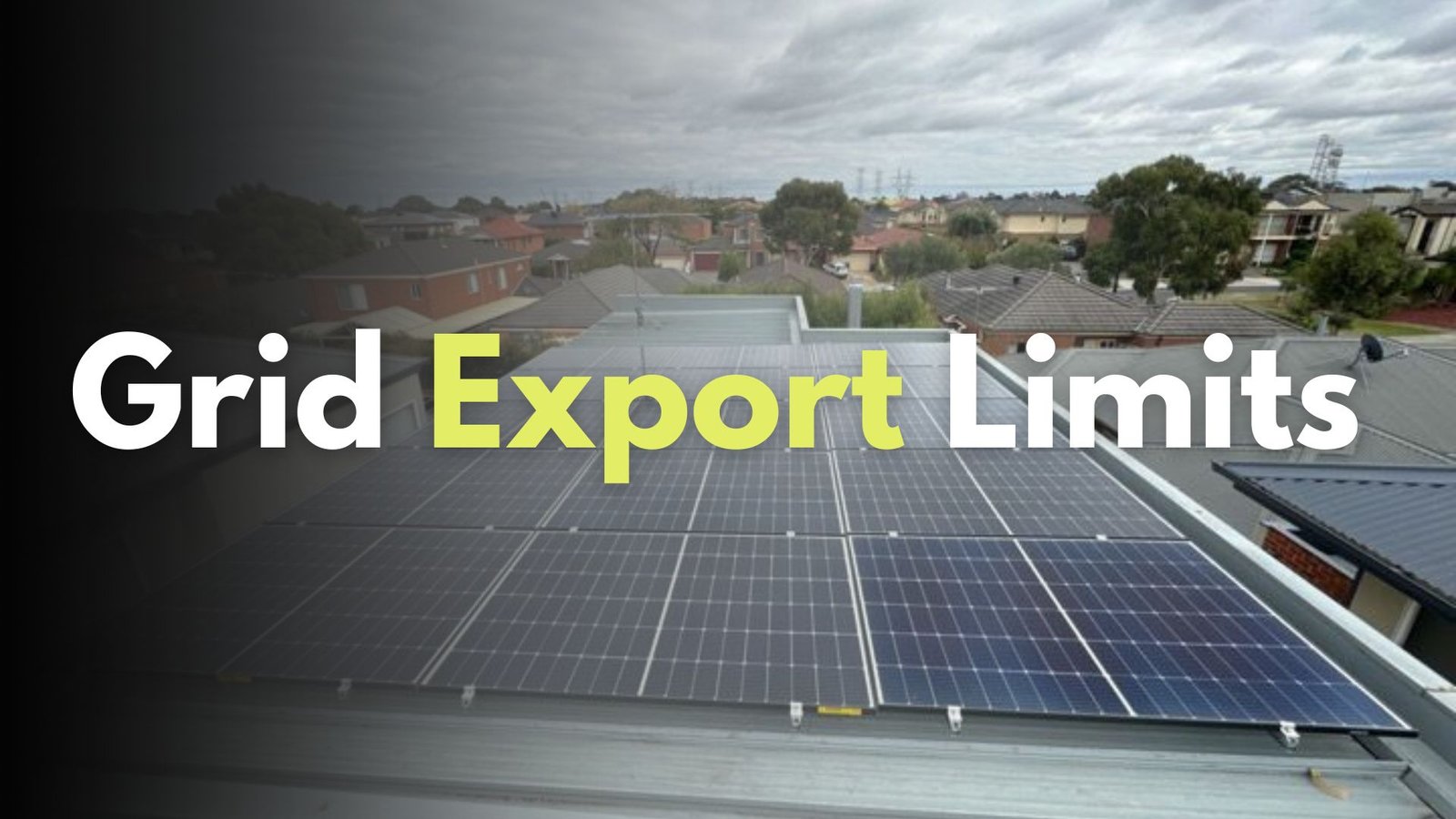
Tarneit’s Energy Boom: How to Avoid Grid Export Limits with Smart Inverters
Tarneit is buzzing. Not because of traffic or new shopping centres—but because of energy! More and more homes in this fast-growing Melbourne suburb are investing in solar panels and battery systems. Families, retirees, and young professionals alike are discovering that clean energy not only saves money but also improves comfort and independence from rising power bills.
But there’s one catch: grid export limits. If your solar system sends too much energy back to the grid, you might see lower feed-in credits—or even system restrictions. Luckily, there’s a smart solution: smart inverters.
In this blog, we’ll explain:
- What grid export limits are,
- Why they matter in Tarneit,
- How smart inverters work,
- Benefits for homeowners,
- Real-life examples,
- And how to choose the right system.
Let’s dive in!
Get a Free Quote
What Are Grid Export Limits?
When your solar system produces more electricity than your home uses, the extra power gets sent (or “exported”) back into the electricity grid. Many energy providers in Victoria have export limits, which means they cap how much solar energy can be sent back at any given time.
Think of it like a highway. If too many cars (electricity) try to enter at once, it creates congestion. To prevent overloads, grid export limits act like traffic lights—slowing or stopping excess energy from entering the grid.
If your system exceeds the limit, one of two things can happen:
- Your solar output is throttled or reduced, meaning your panels produce less power even if the sun is shining.
- You receive less credit for exporting energy to the grid.
This can feel frustrating—especially for families who invested in solar to maximise savings.
Why Grid Export Limits Matter in Tarneit
Tarneit has become one of the fastest-growing communities in Melbourne’s west. With new developments, larger homes, and more rooftop solar installations, local networks are becoming crowded with solar production.
This means:
- More homes exporting solar energy at peak times,
- Strain on the local grid during sunny afternoons,
- Increased chances of export limits being enforced.
If you’ve ever seen your solar system’s output suddenly drop around midday—even with blue skies—that might be the grid limiting export to balance supply and demand.
So what can Tarneit homeowners do? The answer lies in how your solar works, not just how much you install.
What Is a Smart Inverter?
A smart inverter is a next-generation device that manages how solar energy flows between your home, your battery (if you have one), and the grid.
Traditional inverters simply convert DC solar power to AC for household use and send extra out to the grid. But smart inverters are, well—“smart.” They can:
Monitor and control how much energy goes to the grid
Store excess power in a battery
Adjust output in real-time based on grid conditions
Maximise self-consumption (use more of your own solar energy)
Reduce export automatically to stay within limits
Imagine your home as a water tank. Traditional inverters fill the tank, and once it’s full, the water overflows into the street (the grid). Smart inverters act like smart taps: they divert extra water into other tanks (like a battery or appliances) so nothing spills over.
This means you use more of your own power and send less to the grid—without losing money or efficiency.
Real-Life Benefits for Tarneit Homeowners
Let’s look at tangible benefits you might experience:
Lower Electricity Bills
By using more of your solar power in your home instead of exporting, you buy less from the grid—saving you money every day.
Better Return on Solar Investment
Instead of losing potential generation due to export limits, you maximise usage or battery storage, which means you get more value from your system.
Reduced Stress on the Grid
Your home becomes part of the solution. Smart inverters help stabilise the local grid, which benefits all residents.
Better Battery Performance
Batteries paired with smart inverters can:
- Charge during peak solar hours,
- Discharge when electricity rates are highest,
- Reduce reliance on the grid during peak demand.
Lower Carbon Footprint
By optimising how your solar energy is used—and reducing waste—you contribute to a cleaner energy future for Tarneit.
Examples of Smart Inverter Strategies
Here are some ways smart inverters can manage energy:
Time-of-Use Load Shifting
Smart inverters can be programmed to:
- Store excess solar in batteries mid-day,
- Run high-energy appliances when solar is abundant,
- Use battery power in the evening when grid electricity is expensive.
This reduces both export and reliance on expensive peak-time energy.
Dynamic Export Limiting
Instead of a fixed export limit (like 5 kW), smart inverters can adapt in real-time based on network conditions. That means:
- Higher export when grid allows,
- Lower export when the grid is strained.
Priority Zones in the Home
Inverters can prioritise certain circuits:
- Fridges and freezers get priority,
- EV chargers can activate after solar is abundant,
- Pool pumps can run during peak solar hours.
These smart decisions maximise solar use and avoid waste.
Do You Need a Smart Inverter or Battery?
You don’t always need a battery to benefit from a smart inverter. Smart inverters alone can reduce export and increase self-consumption.
But if you want:
Higher savings
Backup power during outages
Evening solar usage
Better export control
…then combining a battery with a smart inverter is often the best choice.
Here’s a quick comparison:
|
Feature |
Basic Inverter |
Smart Inverter |
Smart + Battery |
|
Export Control |
❌ |
✔ |
✔ |
|
Maximise Self-Use |
❌ |
✔ |
✔ |
|
Peak Shaving |
❌ |
Limited |
✔ |
|
Backup Power |
❌ |
❌ |
✔ |
|
Dynamic Grid Interaction |
❌ |
✔ |
✔ |
Choosing the Right Smart Inverter
When selecting a system, consider:
Compatibility
Ensure the smart inverter is compatible with your solar panels and battery brand.
Features
Good features include:
- Real-time export control,
- Remote monitoring via app,
- Dynamic grid limit response,
- Scheduled load management.
Cost vs Benefit
Smart inverters cost more than basic ones, but savings from:
Lower energy bills
Better self-consumption
Avoiding export penalties
…often outweigh the extra upfront cost.
Installer Expertise
Choose an installer experienced with:
- Smart inverter programming,
- Setting export limits,
- Integrating batteries,
- Monitoring systems.
A well-configured system delivers noticeable benefits.
Tips to Get the Most Out of Your Smart Inverter
Here are practical tips for Tarneit homeowners:
Understand Your Home’s Usage
The more you know about when your family uses energy, the better you can configure your system.
Use the Inverter App
Most smart inverters have apps. These help you:
- Track production and usage,
- Set export limits,
- Schedule battery charging/discharging.
Time High-Usage Appliances Right
Run dishwashers, washing machines, and EV chargers when solar production is highest.
Review After Installation
Ask your installer to review performance after a few sunny days to fine-tune settings.
Final Thoughts
Tarneit’s energy landscape is evolving. More solar, more batteries, and smarter technology means better energy outcomes for households—but also new challenges like grid export limits.
Smart inverters are the bridge between your rooftop and a future where homes are not just consumers, but active participants in the energy system.
They help you:
Use more of your own solar
Reduce bills
Stay within export limits
Improve grid stability
Increase independence from rising energy costs
Whether you’re thinking about installing solar for the first time, upgrading an old system, or pairing solar with batteries, smart inverters are worth considering. They’re not just sophisticated gadgets—they’re tools that put you in control of your energy.
Tarneit’s energy boom is here—and with smart technology, you can make the most of it.
Talk to Our Expert