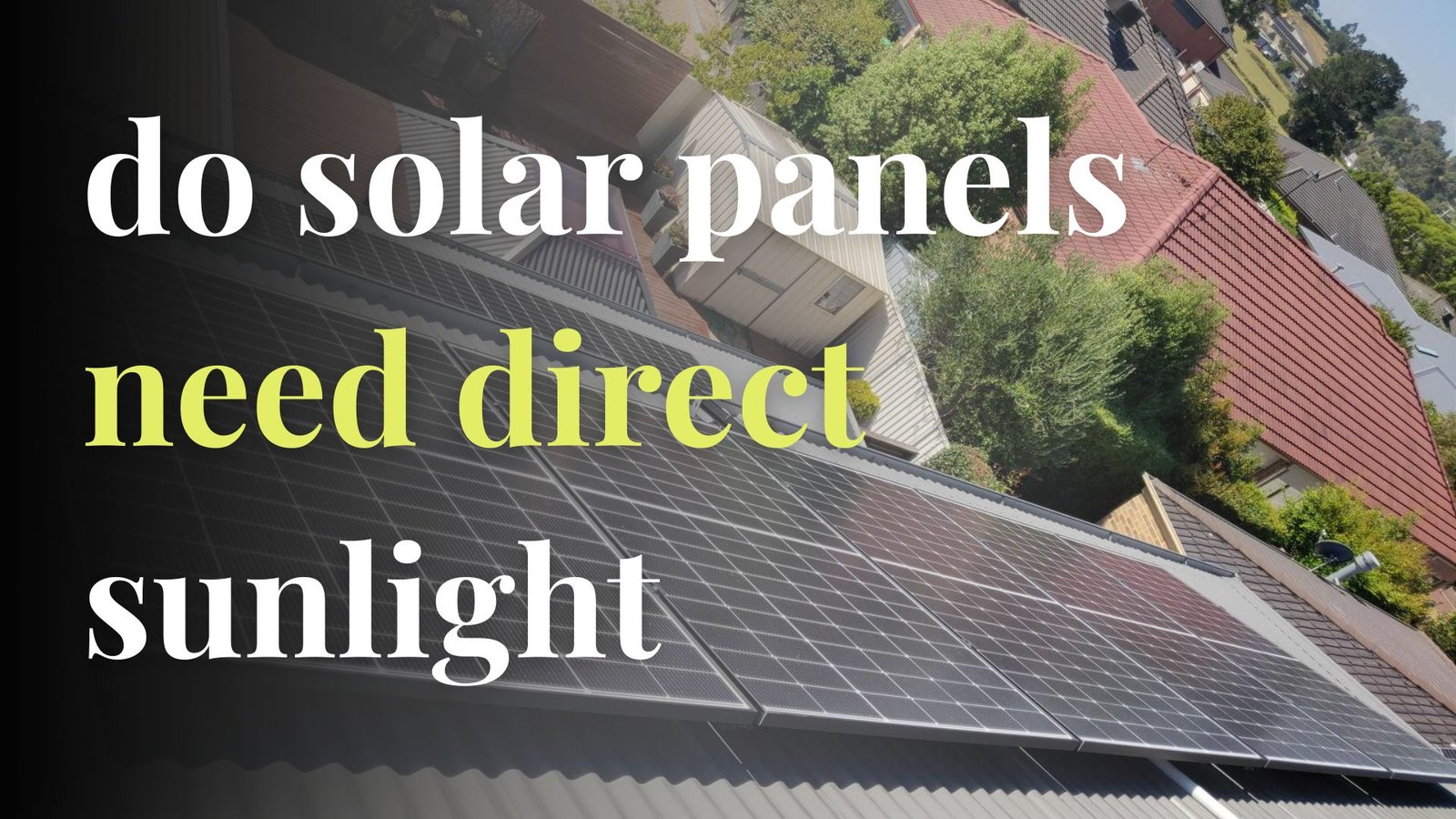
Do Solar Panels Need Direct Sunlight to Work Efficiently
One of the most common questions people ask about installing solar electricity in their homes or businesses is do solar panels need direct sunlight to perform well. A lot of people think that solar panels stop operating when clouds come out, but that’s not true. If you know how solar panels really works, you can make a better, more secure choice that will save you more money in the long term.
We help Australian homes pick solar systems that work well in all kinds of weather, not only on sunny days, at Electrical Masters.
Get a Free Quote
Do solar panels need direct sunlight to generate electricity?
No, solar panels do not need direct sunlight all the time to make power. Solar panels don’t function by capturing heat; they work by capturing light. Even when the sun is behind clouds, your panels can still get light.
A lot of people believe that do solar panels need direct sunlight, which is a frequent misunderstanding that stops them from installing solar when they don’t need to. Even while direct sunlight gives the most output, panels can still make power under indirect or reflected light.
How solar panels work in cloudy and overcast weather
Photovoltaic (PV) cells in solar panels convert sunlight into electricity. When it’s cloudy, the sunlight is still there, but it’s not as strong. Your system might not make as much energy, but it won’t stop working.
A lot of people want to know do solar panels need direct sunlight in the winter or when it rains. The truth is that current solar panels are made to work well in a wide range of lighting conditions. Even though Australia gets a lot of sun, other countries who don’t get as much still use a lot of solar energy, and it works.
Indirect sunlight vs direct sunlight: what’s the difference?
When the sun’s rays hit the panels directly, there is no obstacle. When clouds, haze, or shade disperse the light, it becomes indirect sunlight. Both can make electricity, but the amount they make is different.
So, do solar panels need direct sunlight? Yes, direct sunlight makes output better, but indirect sunlight still makes power that can be used. That’s why it’s important to get an expert to build your system so you can get the most out of your money.
Do solar panels work in winter or cooler temperatures?
Another surprise fact is that solar panels typically work better when it’s cooler. Heat can make electricity less efficient, but the powerful winter sun can still make a lot of power.
Many people who own homes want to know do solar panels need direct sunlight. Even though the days are shorter, a properly sized system and energy-efficient use can save you a lot of money all year round.
Can solar panels work in shade?
Shade might lower output, but that doesn’t mean solar is useless. Modern systems use optimisers or microinverters to lessen the effects of partial shade.
If you’re wondering do solar panels need direct sunlight when trees or buildings block it, the answer depends on how the system is set up. At Electrical Masters, we look at the roof’s layout, shading patterns, and panel location to get the most power out of them, even when conditions are tough.
Solar performance in Australian weather conditions
Australia is one of the best places in the world to use solar energy. Solar systems work well even in states where the sky is often cloudy.
This means that Australian households don’t have to worry as much about do solar panels need direct sunlight. Solar power is still one of the best ways to save money on your energy costs and cut down on carbon emissions, even with high UV levels and long days.
Factors that affect solar panel efficiency (besides sunlight)
Sunlight is important, but it’s not the only factor that determines performance. Other key elements include:
- Panel quality and efficiency rating
- Roof angle and direction
- Inverter technology
- System size
- Installation quality
People often focus on do solar panels need direct sunlight, but professional installation and premium components matter just as much.
How Electrical Masters helps you get maximum solar output
We at Electrical Masters don’t think that all solar systems are the same. We make strategies depending on how much energy you need, the state of your roof, and the weather in your area.
If you’re still wondering do solar panels need direct sunlight, our professional staff will tell you exactly how your system will work all year long before you buy it. People trust us for long-term energy savings since we are open about everything.
Are solar panels still worth it without full sun exposure?
Of course. Solar electricity can help homes that don’t get sunlight all day. Solar is still a great method to save money on electricity if you use smart system design, battery storage, and energy-efficient behaviours.
If you’re worried that do solar panels need direct sunlight to be useful, the answer is clear: solar can still provide big financial and environmental benefits even when the weather isn’t perfect.
Final thoughts
One of the biggest misunderstandings about renewable energy is that solar doesn’t work. It is not necessary for success to have direct sunlight, although it does help. Solar power is still one of the best solutions to lower your electricity bills and dependence on energy in Australia because of the country’s climate and modern solar technologies.
Electrical Masters can help you make the proper option with trust if you’re thinking about going solar and want honest, professional guidance.
Frequently Asked Questions (FAQs)
No. Solar panels can generate electricity from indirect or diffused sunlight, though output is higher in direct sun.
Yes. Rain reduces output but does not stop solar panels from producing power.
No. Solar panels need light to generate electricity, but batteries can store excess energy for nighttime use.
They can be, especially with modern inverter technology and smart system design.
Yes. A professional assessment from Electrical Masters can determine the best setup for your property.
Talk to Our Expert